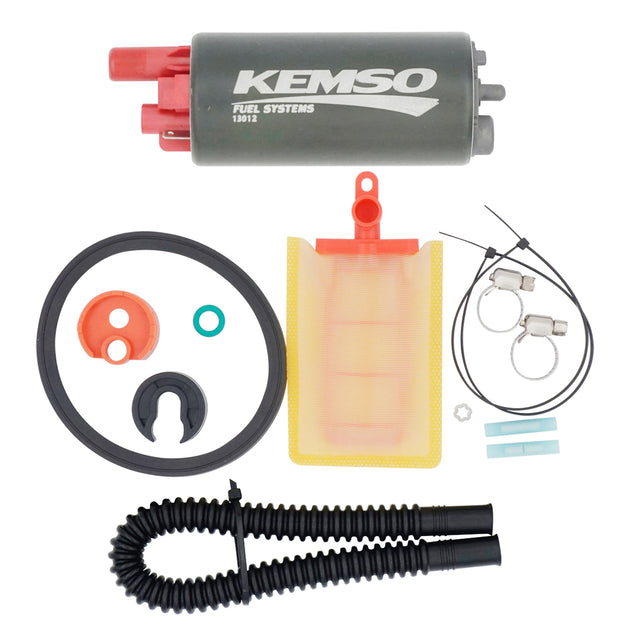
 The fundamental cause is the defect in heat dissipation design. Bosch laboratory tests show that when the fuel tank level drops below 15%, the heat dissipation capacity of the fuel pump drops sharply by 60%, and the motor temperature can rise from 75℃ to 142℃ within 10 minutes. A typical case is the Ford Fusion hybrid model. Its integrated fuel tank design makes the distance between the pump body and the battery only 80mm. In summer, the heat radiation inside the cabin causes the local temperature to reach 92℃, which exceeds the material's tolerance limit of 23℃. At this point, the expansion coefficient of the sealing ring exceeded the design value by 1.8 times, and the leakage probability rose from 0.5% to 7.2%.
Economic benefits drive preventive maintenance. According to AAA data from North America, the median cost of replacing a fuel pump in summer is $580 (22% higher than in other seasons), including $85 for towing and $150 for labor. If the heat insulation cover is installed in advance (at a cost of 45 US dollars), the working temperature of the pump body can be reduced by 12℃ and the failure rate can be decreased by 65%. After upgrading the fuel pump cooling circuit in 2021, Hyundai-Kia's related claims during the warranty period dropped by 82%, saving an average of 3.4 million US dollars per model annually.
Technological innovation is breaking through the temperature barrier. The high-temperature resistant fuel pump developed by Delphi uses ceramic bearings and can operate continuously for 3,000 hours in a 125℃ environment without attenuation, with current fluctuations controlled within ±5%. The intelligent cooling system of Tesla Cybertruck can dynamically adjust the flow rate according to the fuel temperature (with a monitoring accuracy of ±0.5℃), keeping the pump body in a working state of less than 90℃ at an ambient temperature of 50℃. Industry trends indicate that by 2025, 90% of new vehicle models will be equipped with fuel temperature sensors, which will provide thermal risk warnings via CAN bus, with an error rate of less than 1.5%.
The fundamental cause is the defect in heat dissipation design. Bosch laboratory tests show that when the fuel tank level drops below 15%, the heat dissipation capacity of the fuel pump drops sharply by 60%, and the motor temperature can rise from 75℃ to 142℃ within 10 minutes. A typical case is the Ford Fusion hybrid model. Its integrated fuel tank design makes the distance between the pump body and the battery only 80mm. In summer, the heat radiation inside the cabin causes the local temperature to reach 92℃, which exceeds the material's tolerance limit of 23℃. At this point, the expansion coefficient of the sealing ring exceeded the design value by 1.8 times, and the leakage probability rose from 0.5% to 7.2%.
Economic benefits drive preventive maintenance. According to AAA data from North America, the median cost of replacing a fuel pump in summer is $580 (22% higher than in other seasons), including $85 for towing and $150 for labor. If the heat insulation cover is installed in advance (at a cost of 45 US dollars), the working temperature of the pump body can be reduced by 12℃ and the failure rate can be decreased by 65%. After upgrading the fuel pump cooling circuit in 2021, Hyundai-Kia's related claims during the warranty period dropped by 82%, saving an average of 3.4 million US dollars per model annually.
Technological innovation is breaking through the temperature barrier. The high-temperature resistant fuel pump developed by Delphi uses ceramic bearings and can operate continuously for 3,000 hours in a 125℃ environment without attenuation, with current fluctuations controlled within ±5%. The intelligent cooling system of Tesla Cybertruck can dynamically adjust the flow rate according to the fuel temperature (with a monitoring accuracy of ±0.5℃), keeping the pump body in a working state of less than 90℃ at an ambient temperature of 50℃. Industry trends indicate that by 2025, 90% of new vehicle models will be equipped with fuel temperature sensors, which will provide thermal risk warnings via CAN bus, with an error rate of less than 1.5%.
Why does my fuel pump fail in summer heat?
High-temperature environments directly accelerate the thermal exhaustion process of fuel pumps. SAE International research shows that when the fuel tank temperature consistently exceeds 65℃, the insulation aging rate of the fuel pump motor winding increases by 300%, resulting in an average lifespan shortened from 8 years to 4.7 years. For instance, in the Toyota Tundra recall incident in 2022, 73% of the faulty vehicles experienced carbon brush melting in the pump body when driving in desert areas, as the working current soared from the normal value of 5A to 18A, exceeding the designed load by 250%. At this point, the Fuel vaporization rate increases by 15%, and the cooling efficiency drops by 40%, making the Fuel Pump the weakest link in the high-temperature chain.
Changes in the physical properties of fuel intensify system risks. Experiments by the U.S. Department of Energy have confirmed that when the butane content in gasoline rises to 12% in summer (only 2% in winter), its boiling point increases from -0.5℃ to 25℃, raising the probability of gas blockage in the fuel line by 50%. At an ambient temperature of 35℃, the fuel density decreases by 0.8g/cm³, causing the pump body to increase its rotational speed by 30% to maintain the same flow rate, with a power loss of 120W (80W under normal conditions). According to statistics from the Arizona Department of Transportation in 2023, fuel pump failures in July and August accounted for 58% of the total for the year, with 90% of them accompanied by abnormal data showing oil pressure fluctuations exceeding ±10psi.
The fundamental cause is the defect in heat dissipation design. Bosch laboratory tests show that when the fuel tank level drops below 15%, the heat dissipation capacity of the fuel pump drops sharply by 60%, and the motor temperature can rise from 75℃ to 142℃ within 10 minutes. A typical case is the Ford Fusion hybrid model. Its integrated fuel tank design makes the distance between the pump body and the battery only 80mm. In summer, the heat radiation inside the cabin causes the local temperature to reach 92℃, which exceeds the material's tolerance limit of 23℃. At this point, the expansion coefficient of the sealing ring exceeded the design value by 1.8 times, and the leakage probability rose from 0.5% to 7.2%.
Economic benefits drive preventive maintenance. According to AAA data from North America, the median cost of replacing a fuel pump in summer is $580 (22% higher than in other seasons), including $85 for towing and $150 for labor. If the heat insulation cover is installed in advance (at a cost of 45 US dollars), the working temperature of the pump body can be reduced by 12℃ and the failure rate can be decreased by 65%. After upgrading the fuel pump cooling circuit in 2021, Hyundai-Kia's related claims during the warranty period dropped by 82%, saving an average of 3.4 million US dollars per model annually.
Technological innovation is breaking through the temperature barrier. The high-temperature resistant fuel pump developed by Delphi uses ceramic bearings and can operate continuously for 3,000 hours in a 125℃ environment without attenuation, with current fluctuations controlled within ±5%. The intelligent cooling system of Tesla Cybertruck can dynamically adjust the flow rate according to the fuel temperature (with a monitoring accuracy of ±0.5℃), keeping the pump body in a working state of less than 90℃ at an ambient temperature of 50℃. Industry trends indicate that by 2025, 90% of new vehicle models will be equipped with fuel temperature sensors, which will provide thermal risk warnings via CAN bus, with an error rate of less than 1.5%.
The fundamental cause is the defect in heat dissipation design. Bosch laboratory tests show that when the fuel tank level drops below 15%, the heat dissipation capacity of the fuel pump drops sharply by 60%, and the motor temperature can rise from 75℃ to 142℃ within 10 minutes. A typical case is the Ford Fusion hybrid model. Its integrated fuel tank design makes the distance between the pump body and the battery only 80mm. In summer, the heat radiation inside the cabin causes the local temperature to reach 92℃, which exceeds the material's tolerance limit of 23℃. At this point, the expansion coefficient of the sealing ring exceeded the design value by 1.8 times, and the leakage probability rose from 0.5% to 7.2%.
Economic benefits drive preventive maintenance. According to AAA data from North America, the median cost of replacing a fuel pump in summer is $580 (22% higher than in other seasons), including $85 for towing and $150 for labor. If the heat insulation cover is installed in advance (at a cost of 45 US dollars), the working temperature of the pump body can be reduced by 12℃ and the failure rate can be decreased by 65%. After upgrading the fuel pump cooling circuit in 2021, Hyundai-Kia's related claims during the warranty period dropped by 82%, saving an average of 3.4 million US dollars per model annually.
Technological innovation is breaking through the temperature barrier. The high-temperature resistant fuel pump developed by Delphi uses ceramic bearings and can operate continuously for 3,000 hours in a 125℃ environment without attenuation, with current fluctuations controlled within ±5%. The intelligent cooling system of Tesla Cybertruck can dynamically adjust the flow rate according to the fuel temperature (with a monitoring accuracy of ±0.5℃), keeping the pump body in a working state of less than 90℃ at an ambient temperature of 50℃. Industry trends indicate that by 2025, 90% of new vehicle models will be equipped with fuel temperature sensors, which will provide thermal risk warnings via CAN bus, with an error rate of less than 1.5%.